 noteboard
1. Define the audience and the campaign objective
Write who the campaign is for in terms that affect the work. “People interested in ceramics” is a start, but “local beginners who are curious about a first session” tells you more about the questions the campaign should answer. Keep existing customers separate if they need a different message.
Choose an objective you can recognize afterward. In this example, a small studio wants to fill ten places at one introductory workshop. That goal helps the team decide how much work to produce and what information the invitation needs.
Gather what you already know about the audience. Recent questions about experience level, clothing, and what people take home can inform the campaign. Keep guesses visible as questions. A campaign based on an untested explanation should leave room to learn whether that explanation is right.
2. Compare a few ways to communicate the offer
Write the offer plainly before brainstorming headlines. The workshop includes a guided first activity and a small piece made during the session. Check the details with the host so the creative work describes the experience accurately.
Try a few campaign angles. A demonstration can show the activity. A short participant story can explain what a first visit felt like. A practical invitation can answer the common booking questions. Choose an angle by how well it addresses the audience's uncertainty, rather than how polished the headline sounds.
For this example, the studio chooses a short demonstration. The main message is “Make a small ceramic piece in your first session.” If you use AI for marketing brainstorming, give it the audience notes and the offer, then ask for different approaches. Keep the final choice tied to what the studio can actually deliver.
3. Give each channel a clear job
Choose channels you can use and maintain with the resources available. The studio already has an email list, a social account, and a booking page, so the first plan can use those. Adding another channel also adds production and review work; include it when there is a reason.
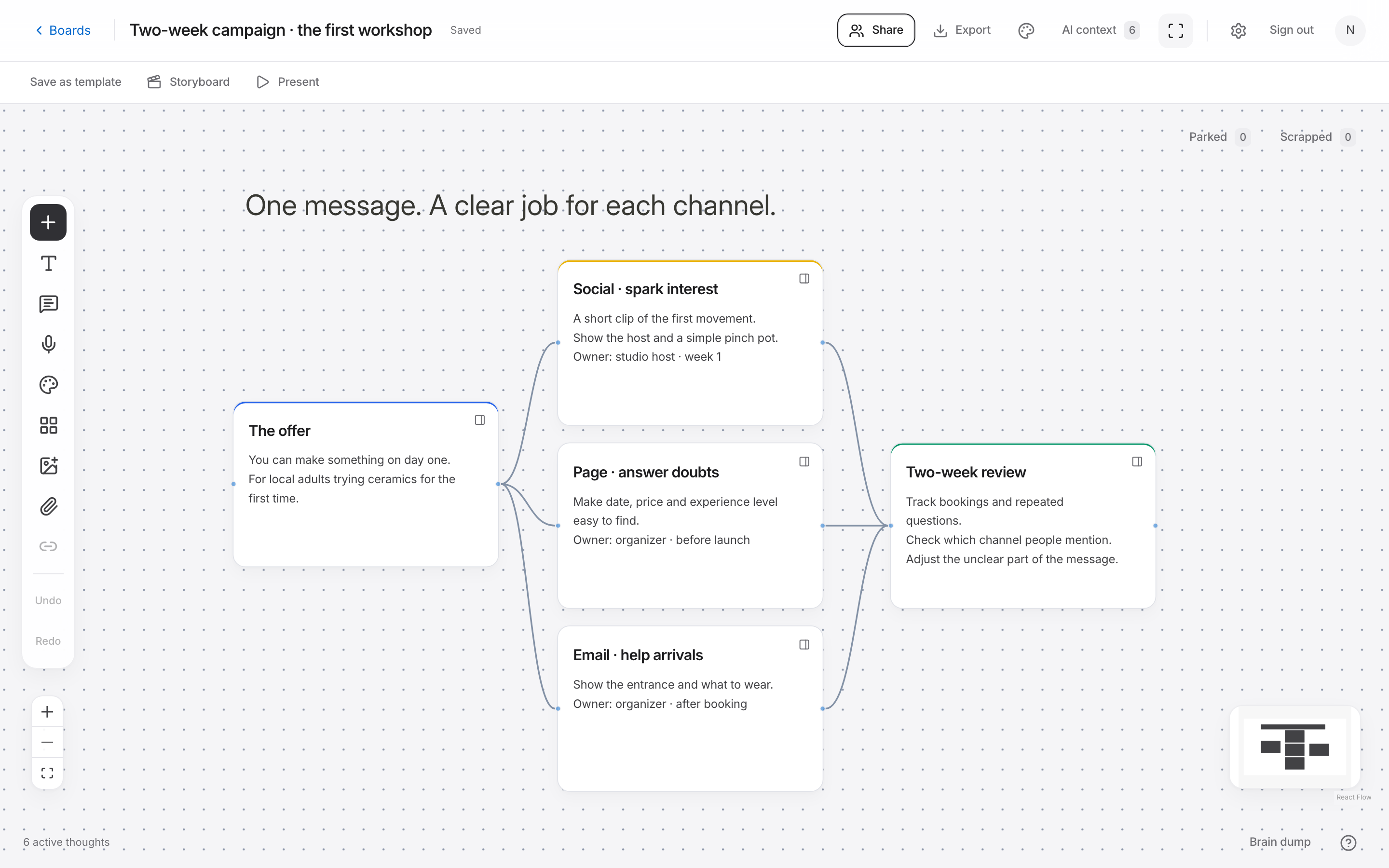
Write what each piece contributes. The video demonstrates the first activity. The page holds the date, location, price, and booking details. The email explains who the session is for and links to the page. A social post introduces the workshop and points to the same information.
Keep the promise consistent across formats. A short video doesn't have to repeat the entire page, but someone who follows the link should recognize the same workshop and result. Put the draft assets beside the message so mismatches are easy to spot during review.
4. Set the budget, owners, dates, and measurement
Give each deliverable an owner and a review date. Separate “ready for review” from “published”: the host still needs time to check the workshop details. Record who can approve the final version so a missing decision doesn't become a last-minute delay.
Write the budget and what it covers. Our fictional plan allows $400 for production and uses the studio's existing channels. Paid advertising would need its own agreed budget and plan. Keep an estimate labeled as an estimate until it has been confirmed.
Choose what to review after launch. Here, bookings are the main outcome, while repeated questions help show where the invitation is unclear. If people visit the page but still ask what they will make, the team has a specific explanation to improve. A small campaign can use those observations without pretending every change proves a cause.
Example: a two-week workshop campaign plan
This plan is deliberately small enough for a studio team to deliver. The budget, capacity, and dates are fictional. Use the same fields for your project, then replace the entries with your actual constraints.
Read down the plan before production starts. Someone should be able to explain who the campaign is for, what is being promised, where the assets will appear, and who needs to do what next.
| Decision | Example campaign plan |
|---|---|
| Audience | Local adults considering their first ceramics workshop |
| Objective | Fill ten places at one introductory session |
| Message | Make a small ceramic piece in your first session |
| Channels | Existing email list, social account, and booking page |
| Owners | Host: demonstration and accuracy check; designer: page and posts; organizer: email and publication |
| Budget | $400 production allowance; no paid advertising included in this example |
| Week one | Confirm the brief Monday, record Tuesday, review drafts Thursday, approve Friday |
| Week two | Publish the invitation, answer questions, and review bookings and remaining uncertainties |
| Review | Compare bookings with the goal and record which practical questions the campaign left unanswered |
Use the response to revise the plan
Keep a short note of what happened and what you changed. Include the question that prompted the change, such as visitors asking whether tools are provided. This is more useful for the next campaign than a folder of assets with no record of the decisions.
Change one unclear part of the invitation, check that the other channels still agree with it, and note what you want to observe next. Marketing campaign planning continues after publication: the response gives you material for the following round.
An AI prompt for this workflow
Suggest three distinct campaign angles for this audience and offer. For each, explain the message, a suitable content format, and the assumption to test.
What should a marketing campaign plan include?
Include the target audience, objective, message, offer, channels, deliverables, budget, milestones, owners, and the measure you will use to review the result. Keep the creative brief and supporting references linked to the plan.
Try this in Noteboard.ai
Use the campaign template as a starting structure. Fill in your audience, message, channels, budget, dates, owners, and measures as you follow the guide.
Explore AI idea generator