 noteboard
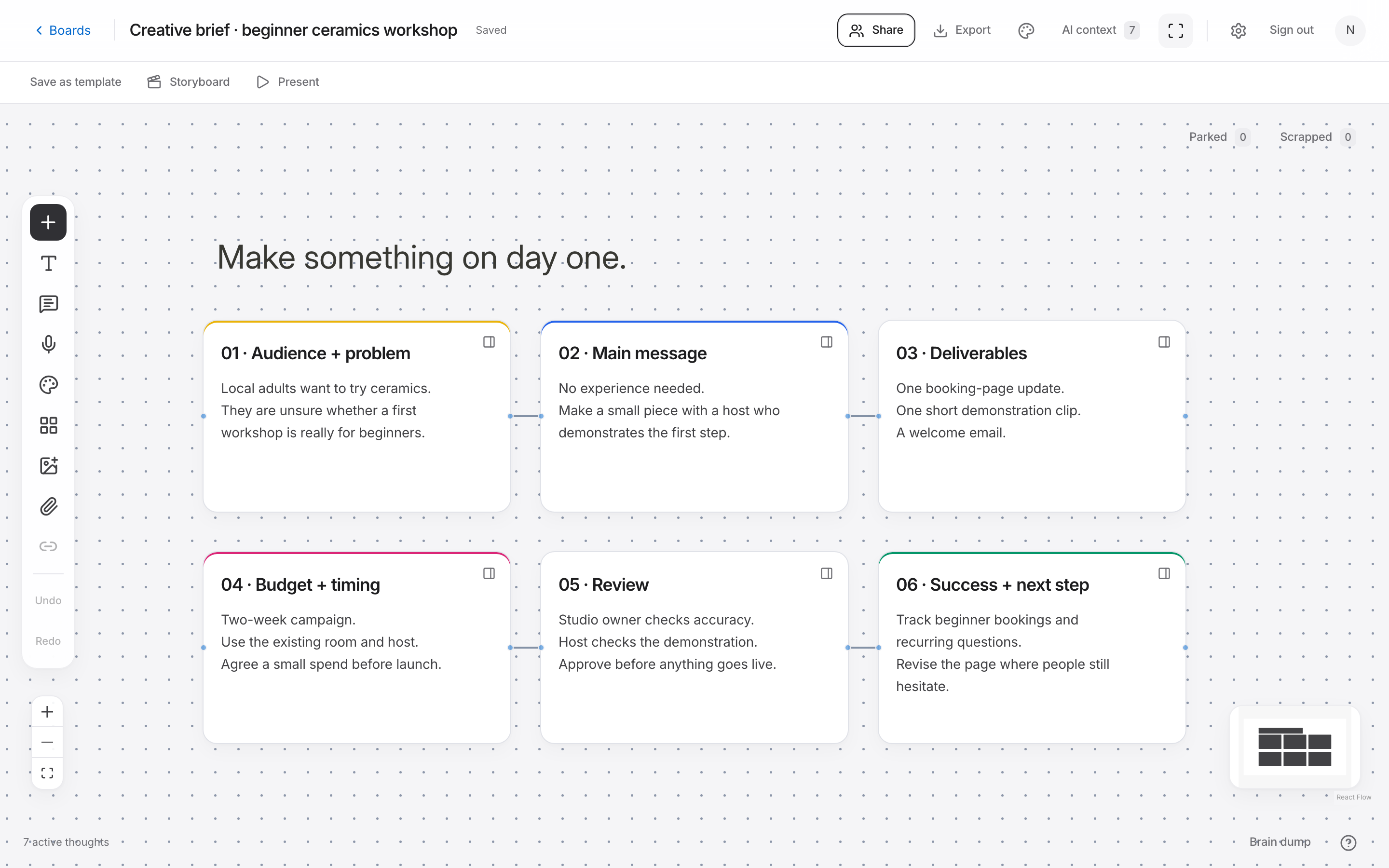
1. Explain the problem and the audience
Start with the situation that prompted the project. “We need three social posts” describes an output, but the person making them still needs to know why. Explain what you want the audience to understand or do, and what is getting in the way today.
For a fictional ceramics studio, the problem might be that interested beginners keep asking whether they need prior experience. The audience is local adults considering their first session. That gives the creative work a specific job: show what the first visit involves and make the invitation easy to understand.
Include the evidence you have, such as common questions or interview notes. Label a guess as a guess. If the team is unsure whether price or confidence is the bigger concern, record the uncertainty rather than writing a brief that quietly treats one explanation as settled.
2. Choose the main message
Write the one thing someone should remember after seeing the work. For the studio, “Make a small ceramic piece in your first session” connects the offer to an understandable result. Keep practical information such as duration, price, and booking details close by.
Add the reasons the message is believable. A demonstration can show the first activity. Photographs can show a beginner's finished piece. The host can explain what help is included. Use details you can support, and check the wording with the person delivering the experience.
If the brief lists several messages as equally important, decide which one leads. A designer or writer can then make choices about emphasis without having to guess which benefit the team cares about most.
3. Specify the work, budget, and schedule
List what needs to be made and where it will appear. Include the format details that affect production: a page, a short video, an email, or a set of posts. Note what assets already exist and who will supply missing photographs, copy, or product information.
Write down the budget and what it covers. A production allowance and an advertising budget are different decisions. If the budget is still open, name the person who will confirm it and when. The same applies to dates that depend on another approval.
Add the concept review, final review, publication date, and approval owner. A small team still benefits from knowing who makes the final call. In Noteboard.ai, use a creative brief template and keep the references and open questions beside the relevant fields.
4. Agree on how the work will be reviewed
Write a few questions the reviewer can answer by looking at the work. For the workshop campaign: can a beginner see what they will make, understand the session details, and find the booking action? Those questions make feedback more useful than a general request to make the design more exciting.
Ask the people doing the work to read the brief before production begins. They may spot a missing format, an impossible deadline, or a message that needs evidence. Resolve the decisions that affect their work first and leave the remaining questions visible.
After a review, record what was approved and what needs another version. If the brief changes, update it where everyone can see it. Otherwise, people can end up working from different decisions while believing they are following the same plan.
Creative brief example: a beginner ceramics workshop
This fictional brief is for a small studio promoting an introductory session. The numbers are working assumptions for the example. Replace them with the actual capacity, prices, and resources for your own project.
Notice how the objective, message, and deliverables connect. The short demonstration helps explain the activity, the page answers booking questions, and the posts introduce the session. Each piece has a reason to exist.
| Brief field | Filled example |
|---|---|
| Problem | Interested beginners are unsure what happens at a first ceramics session. |
| Audience | Local adults considering their first workshop; no prior experience assumed. |
| Objective | Fill ten places for one introductory session. |
| Main message | Make a small ceramic piece in your first session. |
| Supporting material | A host demonstration, original studio photographs, and accurate session details. |
| Deliverables | One booking page, one short demonstration video, three social posts, and one email. |
| Budget | $400 for creative production in this example; confirm advertising spend separately. |
| Timing | Brief Monday; concept review Wednesday; final review Friday; publish after approval. |
| Approval owner | The workshop host checks accuracy and approves the invitation. |
| Review criteria | The activity, date, price, and booking action are clear to a first-time visitor. |
Keep the brief short enough to use
The brief needs enough detail to answer the decisions above, but it doesn't need to contain every research note. Keep the main instructions together and link to supporting material. A reader should be able to find the audience, objective, deliverables, and deadline without searching through a long narrative.
Before sharing, underline vague words such as “modern,” “engaging,” or “premium.” Add an example or a description of what you mean in this project. That small edit often gives the person doing the work more useful guidance than another page of background.
An AI prompt for this workflow
Review this written brief. Which decisions are ambiguous, which requirements conflict, and what should we clarify before making concepts?
Does Noteboard.ai offer creative brief templates?
Yes. Use a creative brief template to bring the audience, objective, key message, deliverables, references, budget, and review dates together. Adapt the structure to the project and share it with the people developing the work.
Try this in Noteboard.ai
Use the creative-brief template to collect your purpose, audience, message, deliverables, direction, and constraints.
Explore Brainstorming templates