 noteboard
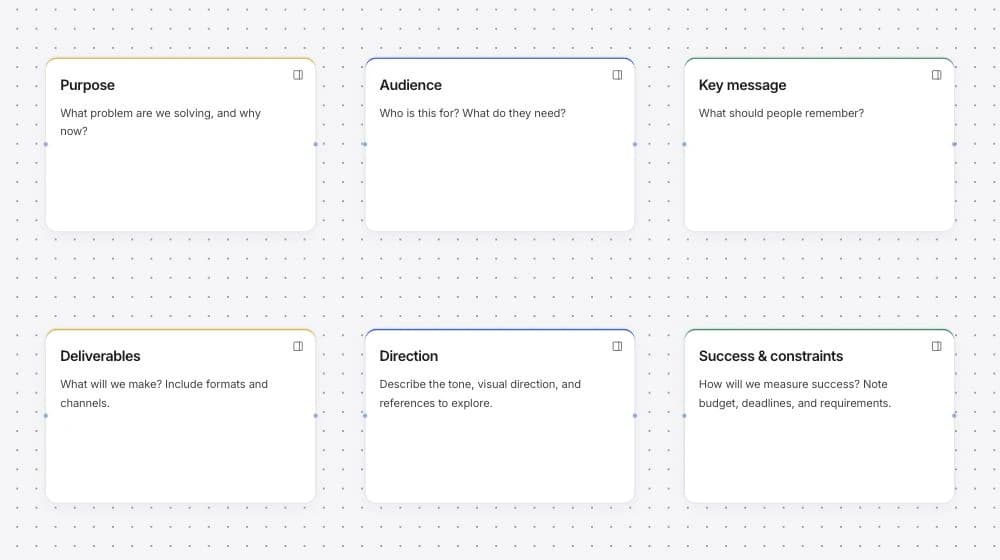
Choose the template for the question you have
Use a brain-dump template when thoughts are competing for attention, a mind map when you want to explore connections, or a creative brief when people need to agree on what the work should achieve. A campaign planning template brings the objective, message, channels, and production questions together.
The template gives the first notes a place without requiring you to know every answer. You can fill the parts you understand, leave a question open, and add the references that help explain it. The gallery above links directly to the available starting structures.
Adapt the questions to the project
Rename a section when a different question would be more useful. Move related cards together, remove a prompt that does not apply, and add the practical limits that affect the work. A short personal project can use a simpler structure than a brief shared by a team.
Bring in images, files, links, and concept text beside the written notes. In a creative brief template, an example image and a sentence about why it belongs can explain the intended tone more clearly than a descriptive word on its own.
Review the structure as the project develops. You can begin with a few open questions and later turn the same board into a record of the direction you chose. The template remains editable throughout that work.
Keep a structure you want to use again
Save a useful board as a reusable template when you expect to ask similar questions in another project. Decide which notes, prompts, and references belong in that reusable structure before saving it. A clear set of questions is easier to adapt than a board full of unexplained project-specific details.
Start another board from the saved template, then update the content for the new situation. You can keep a consistent way to review a brief or plan a campaign while making the actual decisions fresh each time.
Example: adapt a creative brief template for a workshop
A fictional studio needs a brief for an introductory workshop campaign. The template provides sections for the audience, message, deliverables, and constraints. The studio can replace each prompt with the details it knows and mark the remaining decision clearly.
The reusable value is the relationship between those questions. The campaign materials should answer a particular audience need, while the budget and timing determine what the team can make.
A template filled with project decisions
- Audience
- Local beginners who want to understand what a first ceramics session involves.
- Message and references
- Show the first small result, with studio imagery and a short demonstration.
- Deliverables and constraints
- A page, a video, and a few posts, with an owner and review date for each.